Thứ Sáu, 21 tháng 1, 2011

Candlesticks on Stone -- HBI announcement of my fellowship

By Ruth Ellen Gruber

Here's the link to the page on the web site of the Hadassah Brandeis Institute announcing my fellowship as scholar in residence -- click HERE
While at the HBI, Ruth will be working on (Candle)sticks on Stone: Representing the Woman in Jewish Tombstone Art (begun in 2009 with an HBI research grant), which centers on a photographic documentation of the often elaborate tombstones of women in the historic Jewish cemeteries in Eastern Europe, mainly in and around the Bucovina region of northern Romania -- including the Jewish cemetery in Radauti, where some of her ancestors are buried. Focusing on the remarkably varied sculptural representation of candlesticks on these tombs, the project fuses visual documentation and photographic art with research, reportage, reflection and memoir. It encompasses issues of gender, identity and tradition and explores how tradition is (or is not) transmitted. The project is centered on a public web site and blog, but will also result in more traditionally published works.

The Candlesticks web site is http://candlesticksonstone.wordpress.com

Ukraine -- Mark Epstein Exhibition in Kiev

From National Art Museum web site.

By Ruth Ellen Gruber

I gladly pass on information received from Leonid Finberg in Kiev about a current exhibition at the National Art Museum there of the work of the avant garde Kiev painter Mark Epstein, who was active in the 1920s. (THIS LINK to the museum web site provides information in Ukrainian.)

The exhibition presents works of the Kiev period of Epstein's life and represents Epstein's first solo show. It opened in mid-December and runs til the end of January.

 The Kiev Judaic institute has published a book on Epstein to go with the exhibit, Mark Epstein. Return of the Master, that includes illustrations of approximately 60 of Eptein's works, most of which are published here for the first time. 

Dr. Finberg adds:


Mark Epstein was a notable figure in the artistic life of Kyiv during the 1920’s. In 1928, having just finished the Kyiv Arts College , he immersed himself into the progressive arts movement of that time. He attended O. Exter’s art studio where his newest creative ideas were polished. Mark Epstein’s cubic-futurist works of the beginning of the 1920’s – Violoncellist, Family, Tailor, The Two, A Woman with a Yoke – have become part of the history of modern Ukrainian art.

Epstein was one of the founders of the artistic section of the Culture League – an association whose aim was the development of Jewish culture. Members of the section also included O.Tishler, El Lysytsky, J. Chaikov, S. Nikritin, and others. Marc Chagall, N. Altman, R. Falk, and D. Sterenberg also cooperated with the Culture League. In their effort to create new Jewish art, members of the Culture League synthesized images of traditional art with Ukrainian avant-garde ideas.

Epstein took an active part in this work. Unfortunately, only the graphic works of Epstein have been preserved from the 1920’s; representations of his sculptures have survived only as photos, while his paintings have been totally lost.

The work of the Culture League was terminated in the middle of the 1920’s. In 1932, Epstein had to move to Moscow . He took practically no part in exhibitions there, but worked a great deal. However his attempts to adjust his talent to the requirements of the times bore no evident fruit.

Thứ Ba, 18 tháng 1, 2011

Poland --evocative blog posts about Lesko cemetery (and synagogue)

Lesko Jewish cemetery, 2006. Photo (c) Ruth Ellen Gruber


By Ruth Ellen Gruber

I have just come across two very detailed blog posts about the synagogue and ancient Jewish cemetery in Lesko, in the far southeastern corner of Poland.

Both posts, on http://riowang.blogspot.com, are very informative and  richly illustrated with photographs -- they make me wish I had spent more time in Lesko when I was last there, in 2006, updating JHT.

Lesko synagogue, 2006. Photo (c) Ruth Ellen Gruber

Another visit to Mushroom Farm Restaurant at Genting Highlands (2010)

We were advised to visit the Mushroom Farm Restaurant (N3 25.191 E101 47.848) after the dinner time to avoid the crowded situation and enjoy our meals slowly, so we had some light snacks to temporary filled up our stomach. The pick-up time will be on 9.30pm sharp at the Main Entrance of Genting Hotel.
It was a surprised when we reached the restaurant....

The Mushroom Farm Restaurant of Genting Highlands

Great! It was ONLY three tables occupied. We placed our order immediately!

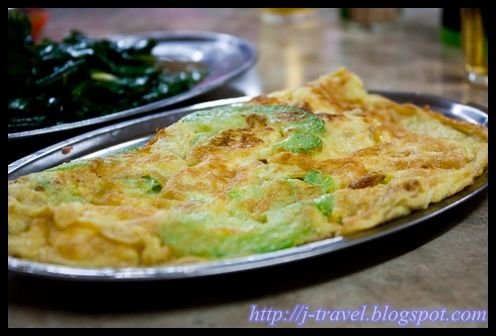
1)  Omelette
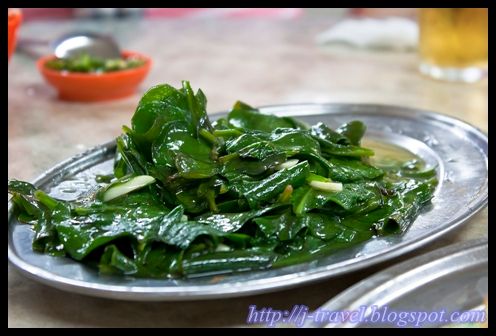
2)  Vegetables
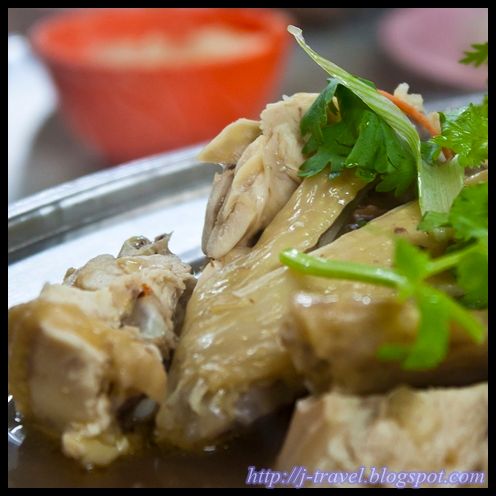
3)  Kampung Chicken (Non-fat chicken)
4)  Steam Codfish

Omelette

Vegetables

Kampung Chicken (Non-fat chicken)


Steam Codfish

Codfish

The Chicken was nice and not too dry. I like the Codfish Very much because it was flaky and moist after cooked. The omelette and the vegetables were average. They cooked it just right!

We really enjoyed our Fabulous dinner especially in the cold weather! Almost 2 hours spend in the restaurant with the company of 6 bottles of Ice Cold Beer! Excellent!

The Damage : MYR200.00 for 4 adults included 6 bottles of Beer. The dinner only cost around MYR100.00 and the rest was the Beers. Affordable & Reasonable! Right?! :)

This is the restaurant we Must visit whenever happen to be here. Please write down the telephone number below (to arrange pick-up) and try it yourself when you are around Genting Highlands. Bear in mind, the van pick-up time is VERY SHARP!

Related post :-
Dinner at Mushroom Farm Restaurant, Genting Highlands (First visit)

Mushroom Farm Restaurant
Tel : +603-6101 2864

Location map of Mushroom Farm Restaurant at Genting Highlands


Italy -- Article on Pitigliano

Entering the old Jewish quarter. Photo (c) Ruth Ellen Gruber

By Ruth Ellen Gruber

The Vancouver Sun runs an article by Amy Stone about Pitigliano, the one-time "Little Jerusalem" in southern Tuscany -- and my choice for possibly the alltime most stunning Italian hill town (see my own article posted here a few months ago).
In the ghetto (indistinguishable today from the rest of the old city), the synagogue and its underground maze with an oven for baking matzo (unleavened Passover bread), the remains of the mikvah ritual bath, a kosher butcher, and “cantina” for pressing and storing kosher wine preserve the Jewish past. A small museum is a new addition.
An elegant and curvaceous Italian beauty, the synagogue was built in 1598 and lovingly restored in the 1990s. Its rounded wooden lectern and carved pews have been meticulously reconstructed, along with the grey-and-white marble floor. Spidery chandeliers hang from the ceiling.
Miraculously, in the 1960s, when walls of the abandoned building collapsed into the ravine, the women’s gallery survived. Once again visitors can climb the stairs for the female eye view of the synagogue through the elaborately carved wooden screen.
One of only three Jews still living in Pitigliano, Elena Servi is the spirit behind what remains of Jewish life. The last matzo was baked in 1939, and the last Yom Kippur service was held 20 years later.

Chủ Nhật, 16 tháng 1, 2011

Another visit to Theme Park Hotel at Genting Highlands

This was our second visit to Theme Park Hotel at Genting Highlands after 3 years. You can check out our last visit Here. The purpose of the trip was to capture the Christmas atmosphere at Genting Highlands. We like those lighting decoration very much!
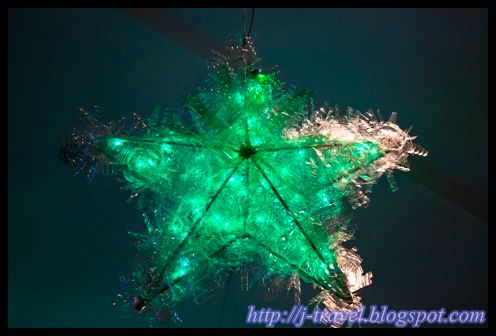
There was a big Christmas Tree beside the main entrance of the hotel which made by recycle water bottle. Nice!

The Big Christmas Tree beside the main entrance of Theme Park Hotel, Genting Highlands

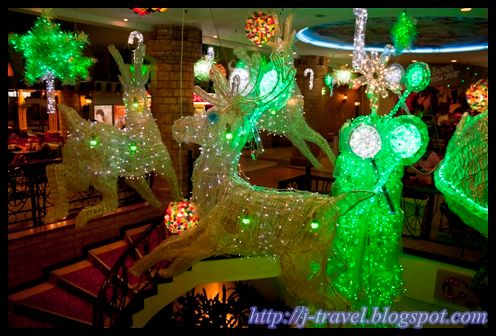
And the lobby also full of LED lighting decoration! The Theme of this year should be 'Recycle!'.

The Christmas Decoration at Theme Park Hotel, Genting Highlands

Santa Claus and his Spaceship!

Do you notice the Recycle Mineral Water bottles in this Star?

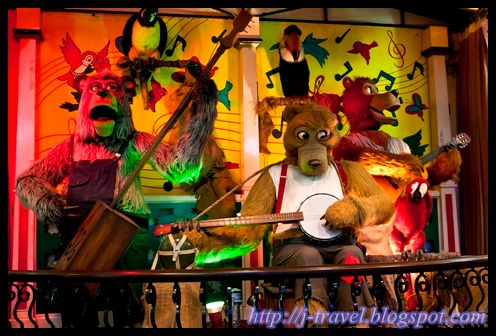
This Three (3) Bears Band at the Lobby area still 3 bears. 
Hopefully they will find more members in year 2011 this year! :)

It was heavy rain while we check-in, but the staff was kind enough to lend out all their umbrellas! Thanks.
We were surprised while we stepped into the room, it was upgraded! New furniture, new setup and new look! Impressed! (You can compare the room 3 years ago from the link below)

One Queen bed

Small sofa...


New Wardrobe

And the bathroom...


Simple shower...

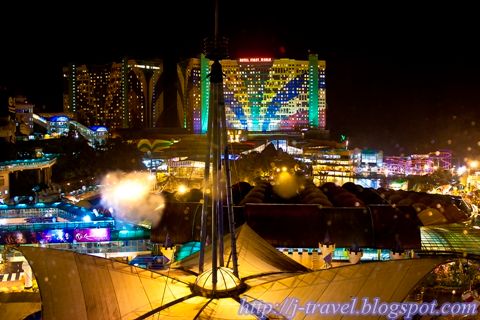
The room looks more clean than ever! And especially the cigarettes smell carpet had totally changed! We were satisfied with the room, especially with the Magnificent night view of Genting! (from the room window)

Taken from the room...

Then, we walked through the hotels surround to catch some fresh cool air and standby for our dinner at Mushroom Farm Restaurant.

You can check their rates from the Genting Official website Here.

Related post :
* Theme Park Hotel, Genting (First visit)

Location map of Theme Park Hotel at Genting Highlands


Thứ Tư, 12 tháng 1, 2011

Eastern Europe -- (Candlesticks) on Stone

My great-great grandmother's tombstone (center) in Radauti. Photo (c) Ruth Ellen Gruber

By Ruth Ellen Gruber

I arrived at Brandeis University, near Boston, this week to take up a Scholar in Residence fellowship at the Hadassah Brandeis Insitute. For almost the next two months, I will be working on my (Candle)sticks on Stone project about the representation of women in Jewish tombstone art.

It is a multi-faceted project based on the photographic work I have carried out in the Jewish cemeteries of northern Romania, Ukraine, Poland and elsewhere, where the decorative carving on Jewish tombstones is often highly elaborate and scuptural.

I have long been fascinated by the iconography and purely decorative carving on the tombs -- my Candlesticks project focuses on the artistry and symbolism used on women's tombstones. Candlesticks often mark the graves of women, as lighting the Sabbath candles is the only one of the "three women's commandments" that can easily be represented in physical artistic form (the others have to do with observing the laws of Niddah separating men from women during their menstrual periods, and that of Challah, or burning a piece of dough when making bread.)

In addition to organizing and adding more photos to the web site, I will also be researching tombstones and symbolism -- and I will also be investigating the transmission of tradition. The main cemetery I have documented, in Radauti, Romania, is where at least two of my female ancestors are buried, each a pious woman who observed traditions and whose gravestone bears the carving of candlesticks. But, in my generation,  few if any of the descendants of these women regularly light the candles.

Bài đăng phổ biến