Thứ Hai, 3 tháng 1, 2011

Second (2nd) visit to J & J Corner at Portuguese Village, Malacca (Melaka)

The J & J Corner Portuguese Seafood Restaurant (N2 10.986 E102 15.990) is located in the Portuguese Settlement of Malacca. This was our second visit to the restaurant. The reason was because of the Portuguese Baked Fish!

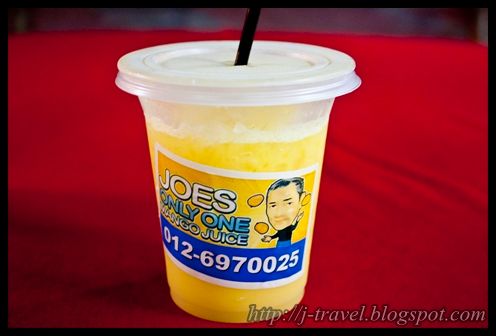
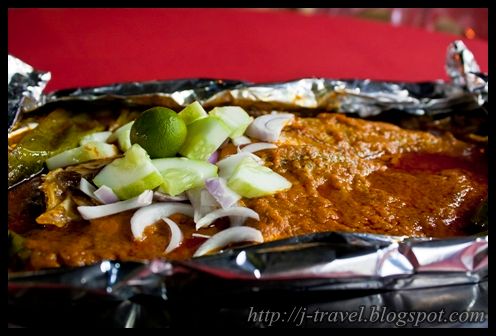
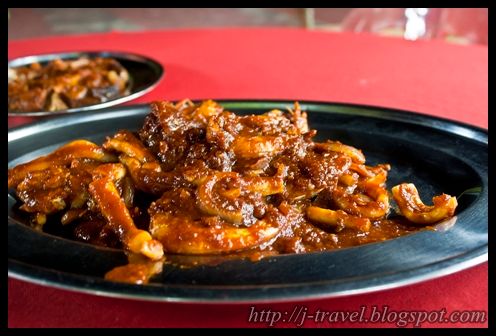
We went to the Restaurant quite early, and there were not many customers at that moment. So I ordered our favorite immediately. The order : Portuguese Baked Fish, Sambal Sotong (squids) and prawn and a plate of Portuguese Brinjal. And the Mango Juice, this is a MUST! :)

The Joes Only One Mango juice at Portuguese Seafood Village

The foods served on the table less than 20 minutes, this was pretty fast compared with our First visit.

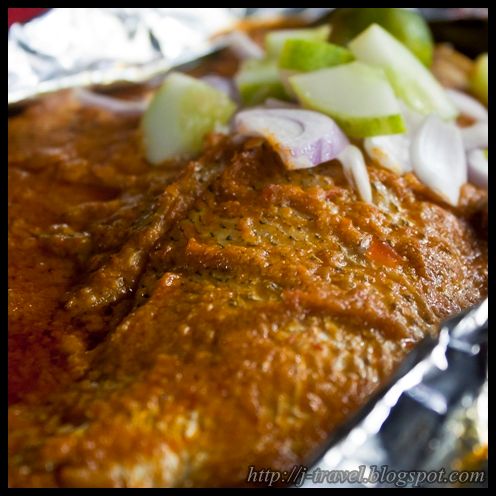
Portuguese Baked Fish of J & J Corner Seafood Restaurant


The Sambal Squids and Prawns

The foods were As Delicious As before! We were enjoying our meal with the cool sea breeze from the Malacca Strait, that was Awesome!
The Damage was about MYR90.00 for 2 adults.

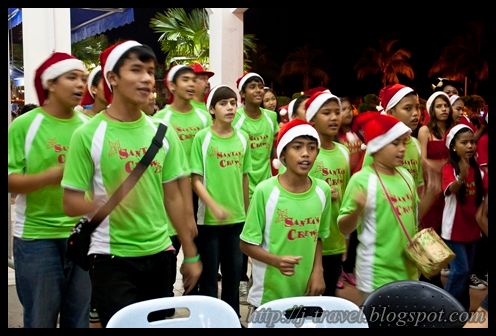
Beside the cool sea breeze, we were also company by a group of Portuguese children where they sang all the Christmas Corals to fill the Christmas atmosphere for the whole Portuguese Seafood Village! We were really enjoyed the cheerful and peaceful moment at the area, and this was One of our Wonderful Christmas dinner!

The Portuguese Children singing the Christmas Carols!

We continued to walk at the Portuguese Settlement to capture some X'mas atmosphere from the village after our dinner...

Well, we will plan again on next Christmas. :)

Location map of the J & J Corner Seafood Restaurant of Portuguese Settlement, Malacca


Thứ Sáu, 31 tháng 12, 2010

Jews, Travel, Anti-Semitism?

By Ruth Ellen Gruber

Hilary Larson, a travel writer for the New York Jewish Week, has written an article about anti-Semitism and the Jewish traveler...
In Europe, I have found, ugly remarks about Israel and Jewish stereotypes surface as a matter of course, with the tacit assumption that everyone shares an anti-Israel viewpoint — and that nobody present is Jewish.
If it is unfashionable to say ethnically pointed things in historically multicultural America, it can sometimes seem the opposite abroad, at least with regard to Jews and Israel. And it can make traveling to otherwise lovely lands, filled with otherwise friendly people, very uncomfortable for American Jews.
 She also writes:
I’ve seen a lot of swastikas in my travels, and heard plenty of verbal equivalents. But I’ve also been surprised by the degree to which some Europeans are excited to meet a Jew (a rare specimen in some parts), or demonstrate genuine interest and enthusiasm over Jewish culture — like my German classmates in Italy who made a point of touring local synagogues.
Though anti-semitism is not the focus of this blog -- I'm wondering what readers have to say on the subject.

Thứ Tư, 29 tháng 12, 2010

Eating Jewishly

By Ruth Ellen Gruber


A couple of months ago, Saveur magazine published a series of articles by David Sax about eating Jewishly in Budapest and Bucharest. I advised him on the piece and pointed out people to talk to in Budapest -- essentially the same people that I noted in my own article about Jewish food in Budapest for JTA.....
A visit to eastern Europe reveals the origins of the cured and smoked meats, matzo balls, pickles, and other beloved staples of Jewish delicatessens around the world. "It hit me that it's nothing short of a miracle that these foods, these traditions, have survived," writes author David Sax.

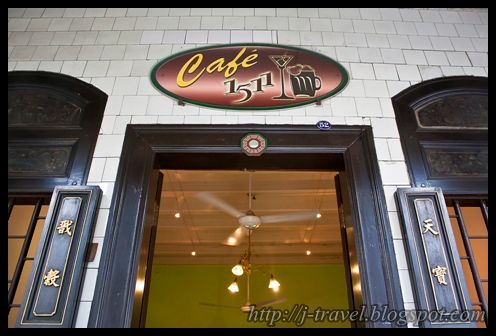
Cafe 1511 at Heeren Street (Jalan Tun Tan Cheng Lock) of Malacca

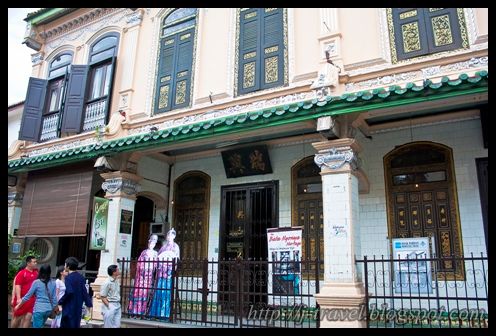
Cafe 1511 (N2 11.736 E102 14.784) is located at Hereen Street (Jalan Tun Tan Cheng Lock) next to the Baba Nyonya Heritage Museum in Malacca. It's just a street next to Jonker Street.

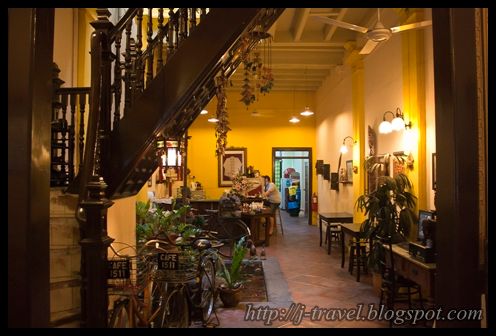
The Baba Nyonya Heritage Museum & Cafe 1511

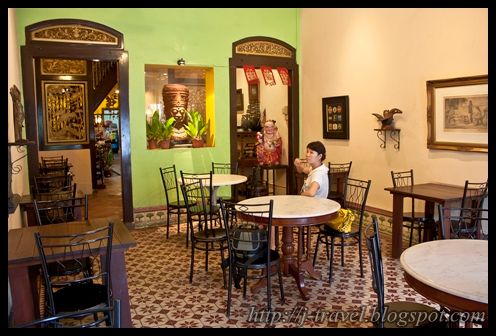
They serve Nyonya Delicacies and Western Food. The Peranakan Decoration is nice and cozy, we felt like walk into a Time Machine...

The front dining area


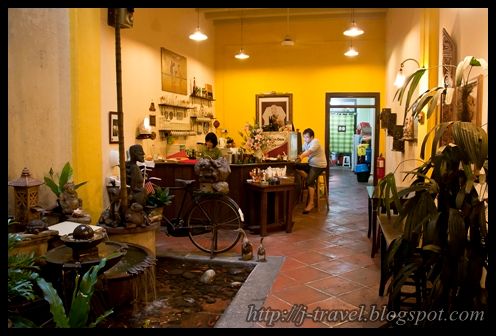
The second hall after the dining area

The Counter

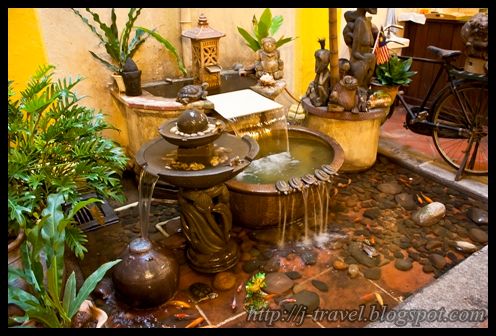
There was a nice fish pond beside the counter, and the antique bicycles...

The Fish Pond & the Antique Bicycle

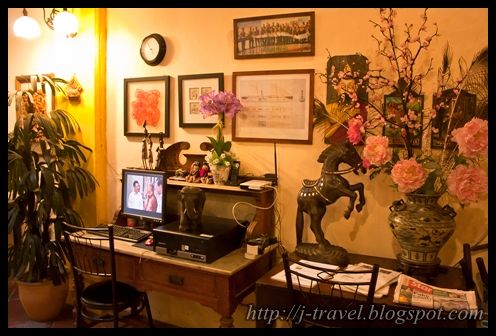
Anyway, the cafe also A Museum to us. Full of antiques, and histories...

Mixed with the antique table and today computer...

Malacca was conquered by Portuguese - Afonso de Albuquerque with 1200 men and eighteen ships in the year 1511, maybe this is the reason the owner use 1511 for his cafe! :)

This was a Totally different dining experience for us! Awesome! Having our tea break in the Museum! Great! Even we were quite hungry that time, but we don't wanna filled up our stomach yet...because we planned our dinner at the Portuguese Seafood Village at Portuguese Settlement.

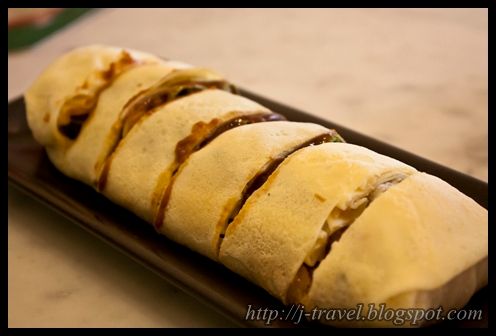
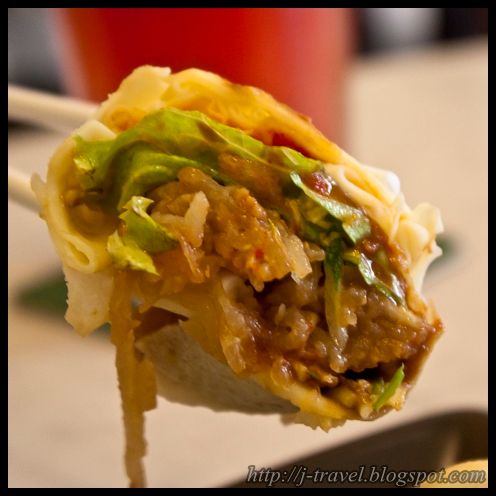
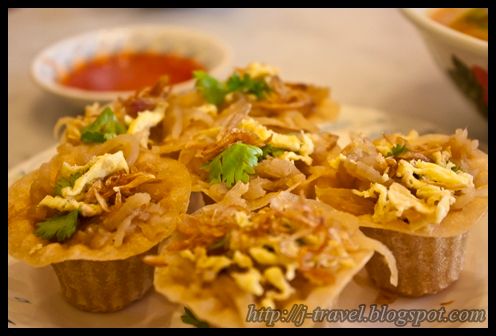
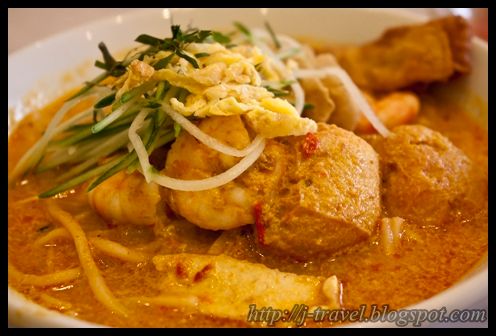
Our purpose here is to taste some of the Nyonya foods here so I ordered a plate of Nyonya Popiah, Pai Tee and the Nyonya Laksa.

Nyonya Popiah


Pai Tee (Top Hats)

Nyonya Laksa

We were very satisfied with all the Excellent foods! I like the Nyonya Popiah very much especially the dark sweet sauce! The Pai Tee were crunchy and tasty, the Nyonya Laksa was flavourful! We enjoyed the foods and the environment Very much! Definitely need a second visit! :)

The Damage : MYR18.50 included a cup of Tea & watermelon juice. It's reasonable price!

Rated : 4.5/5

Highly recommended Cafe, it's worth the visit!
We planned to visit the cafe again  for dinner and also the Museum.

Cafe 1511
52, Jalan Tun Tan Cheng Lock,
75200 Melaka,
Malaysia.
Tel : +606-2860150

The location map of Cafe 1511 of Malacca


Thứ Ba, 28 tháng 12, 2010

Hallmark Hotel at Malacca (Melaka)

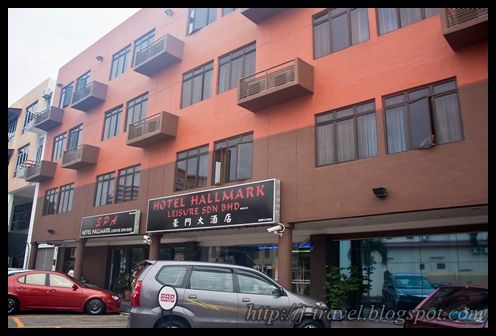
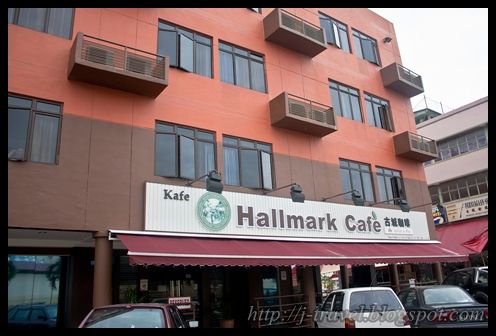
Hallmark Hotel (N2 12.002 E102 14.808) is located along Jalan Portugis of Jalan Kubu main road in Malacca Town. And it's also stone throw away (about 300 meter) to Jonker Street. There are many nice restaurants around the area. This was our first visit to Hallmark Hotel.

Hallmark Hotel, Malacca

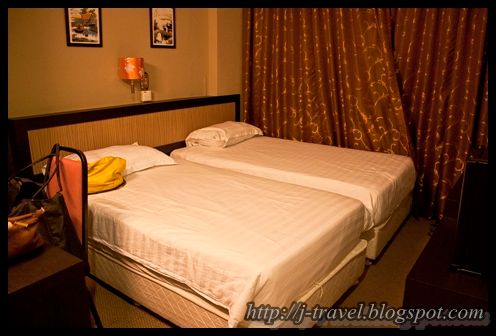
I made the reservation before we drove to Malacca. The standard room rates was MYR105.00 for 2 single beds (with 2 breakfast), the twin bed was fully booked that day.

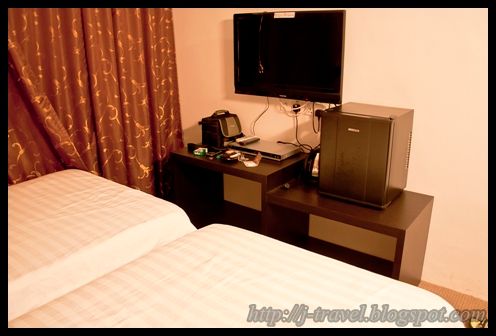
We were quite impressed with the facilities in the room. Beside the necessities, they also provide Free Wifi to the room and A DVD player with the 32" LCD TV. This was the first time I saw a DVD player in the hotel room! But we didn't utilized it and we were not intend to spend the time in the hotel for movie?!

The LCD TV, DVD Player & the Mini Fridge

The room was spacious enough for 2 of us and it was well maintain and Clean! My wife was surprised there was a hair dryer provided in the room too!
Once we check in the hotel, we went for tea break at Cafe 1511 and not really have time to look around the hotel.

The bathroom

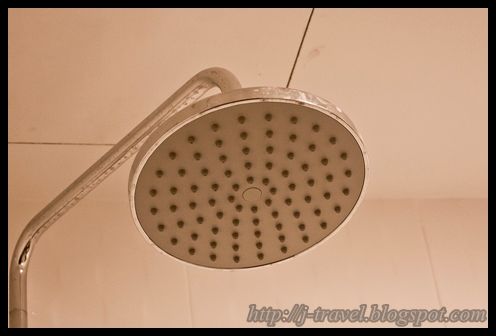
The Big shower head

I like the hot shower, the hot water was Very hot once you turn the tap!

The only 2 comments we had :
1)  The loud water sound from upstairs bathroom, it was not well isolated.
2)  Vehicle parking difficulty!

OH NO! We received  a parking ticket (RM30.00) on the next day morning after we check out from the hotel, I asked the guy at the reception counter on that night before I parked, and he said it's ok to park my car beside the lane. Too bad we got the fine ticket! I show to one of the gentlemen at the reception, and he said he will pay the fine for us, still yet to receive any notification from them. (Cross my finger and pray...)

The room rates was reasonable at MYR105.00 per day and we were satisfied with the staffs at the front counter and also the hotel environment. We will visit again the Hotel again in our future visit to Malacca and hope they will have a better parking area for hotel guests in the future. :)

Hotel Hallmark
68, Jalan Portugis of Jalan Kubu,
75200 Melaka,
Malaysia.
Tel : +606-2812888  Fax : +606-2813409

Grand Hallmark Hotel (Taman Molek)
32 Jalan Molek 2/2 Taman Molek 81100 Johor Bahru Malaysia
Tel: +607-357-2288
Website: www.grandhotelhallmark.com

Location map of Hallmark Hotel in Malacca


Chủ Nhật, 26 tháng 12, 2010

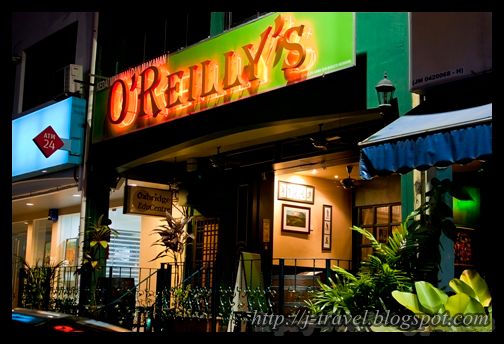
O'REILLY'S Irish Tavern & Grill at Taman Molek, Johor Bahru

O'REILLY'S Irish Tavern & Grill (N1 31.779 E103 47.535) (next to RHB Bank) is located at Jalan Molek 2/2, Taman Molek - Johor Bahru which is facing the newly opened Bank Of China (Tmn Molek). I had been attracted by the menu few months ago but finally we had chance to test the western food serve by the restaurant.

O'REILLY'S Irish Tavern & Grill at Taman Molek, Johor Bahru.

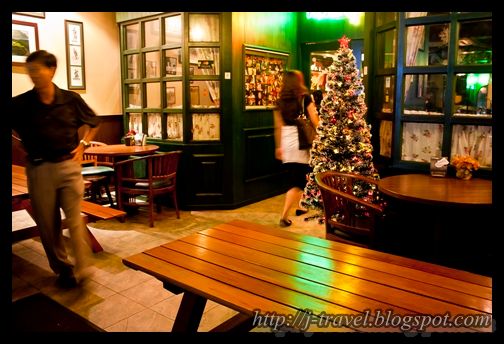
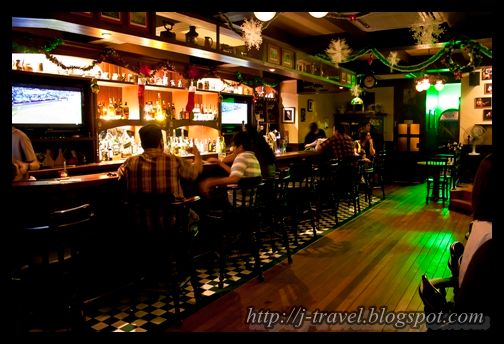
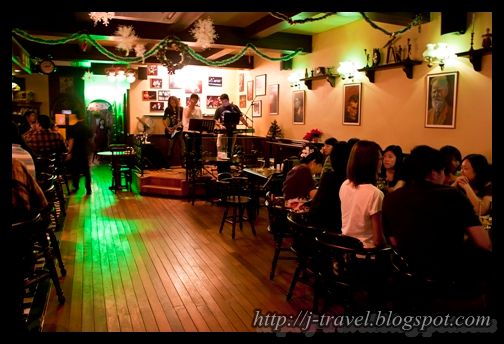
This restaurant had a Rich Irish deco and cozy atmosphere. The front and back are drinking area where you can have your draught beer and also the smoking area. They don't allow to smoke in the dining area, that's Great!

The Front area of the restaurant

Once we stepped in the dining area, I like the Excellent Ambience very much! It was not really crowded on the Saturday evening. A 3 pieces Live Band was playing some soft music and suddenly my daughter attracted by their nice voice! :)

The long Bar Counter, one of my favorite!

The dining area and the Live Band.

Nice band accompany you and your meals

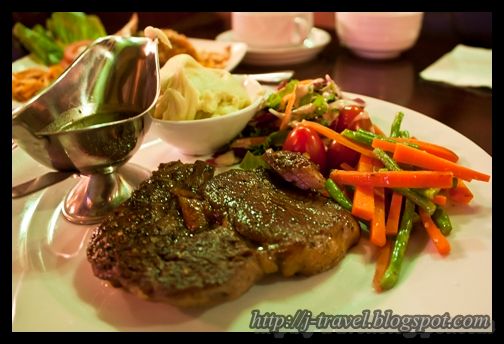
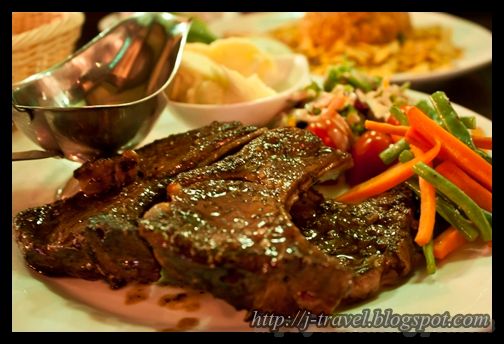
I had the O'REILLY'S Ribeye, my wife had a Lamb Chop and my daughter ordered the O'Reilly's Fried Rice plus a Mushroom Soup.

The O'REILLY'S Ribeye

The Ribeye (close up)

The O'REILLY'S Lamb Chop

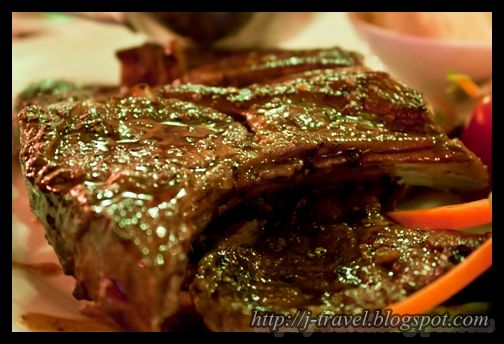
The Lamb Chop (close up)

The Ribeye and the Lamb Chop were served in the same amount of salads and mash potatoes. I like they separated the sauces from the meat! Perfect!

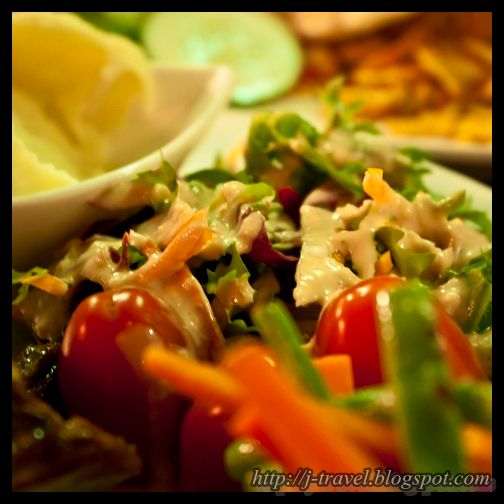
The Salads and the Baby Tomoto

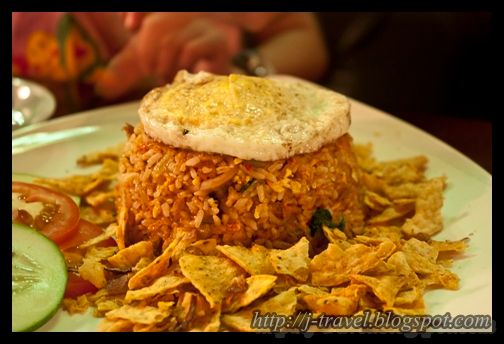
The O'REILLY'S Fried Rice

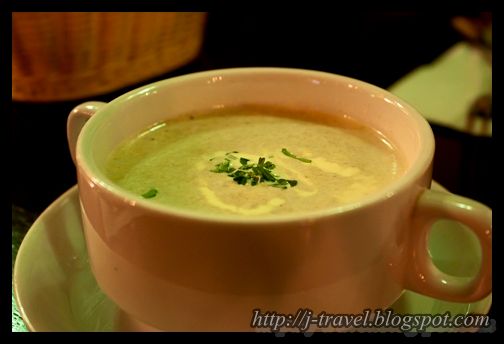
The Mushroom Soup

The Flavourful Ribeye & the Lamb Chop were Well marinated and perfectly served with the sauce. The Chef Grilled it just Nice for my medium well Ribeye. But both of them were a bit salty so we had to enjoyed it with the Beer...
We tested the Fried Rice and it was un-expectedly delicious! Surprised! Mushroom soup was rich and tasty! We really enjoyed the Fabulous dinner especially with the Christmas Decoration and the Carols played by the band!

The Damage : MYR120.00 for 2 adults and 1 child included the drinks and taxes. Beside the Western Food, it's also a Nice place to drink with friends!

Rated : 4/5

Well, I think it's worth for the meal and we will be back again! Hopefully next time the Chef will prepare the foods with less salty! Haha!

O'REILLY'S Irish Tavern & Grill
54, Jalan Molek 2/2,
Taman Molek,
81100 Johor Bahru.

The map location of O'REILLY'S Tavern & Grill at Taman Molek, Johor Bahru


Thứ Bảy, 25 tháng 12, 2010

Ukraine --Design competition in L'viv


Starlings over the dome of the former Jewish hospital (now the maternity hospital) in L'viv next to the Besojlem site. Photo (c) Ruth Ellen Gruber

By Ruth Ellen Gruber
 
As I noted in earlier posts, I was in L'viv, Ukraine, this past week as part of  the nine-member international jury for an important design competition for sites of Jewish history in L'viv (or Lvov, Lwow, Lemberg, Leopoli, as it is called in various languages...) that was organized by the municipal authorities in association with the L'viv Center for Urban History and the German organization GTZ -- the Deutsche Gesellschaft für Technische Zusammenarbeit. The idea for the competition goes back to an international conference held at the Center for Urban History in October 2008 on "Urban Jewish Heritage and History," at which I was the keynote speaker. (I have already posted the results  -- or see them HERE.)

The jury was composed of two eminent architects/urban designers from Switzerland and Germany, the L'viv deputy mayor, three local city architects/heritage experts, and three "Jewish representatives" -- myself, Josef Zissels (chairman of one of the main Ukrainian Jewish umbrella organizations) and Sergey Kravtsov, from the Center for Jewish Art in Jerusalem, who comes from L'viv and is an expert on all aspects of Jewish heritage there.  (See full list below.)

Our brief was to consider some 70 designs sent in from 14 different countries for projects marking three key sites, taking into consideration the following stated criteria:
The competition has two distinct, but interconnected purposes. First, the competiton seeks to respond to the growing awareness of Lviv's multi-ethnic past by contributing to the rediscovery of the city's Jewish history and heritage through creating public spaces dedicated to the city's historic Jewish community. Secondly, the competition also seeks ways to re-design these three open public spaces in such as manner as to improve the quality of life for the contemporary inhabitants and visitors of Lviv.


Our first order of business was to visit the three sites. (We got started late as two of us -- including myself -- got stranded overnight in Vienna because of the snow chaos, and we arrived a day late.)

     -- the "Valley of Death" that was linked to the infamous Janivski concentration, labor and mass murder camp  set up by the German occupation during World War II, where more than 100,000 Jews were killed;


     This site is a deep, rather narrow valley rimmed by steep banks.The site of the camp itself, atop a plateau overlooking the valley, is now occupied by a prison. In the valley there is a pond where bodies were thrown. For a full description, click HERE. Marking the spot is currently a memorial stone and a sign.

     -- the site of three destroyed synagogues in the center of the city's downtown Jewish quarter, just off the main market square, or Rynok;

Ruins of Golden Rose synagogue
Excavations for Bejs Midrash


    The site is an open public space located in the southeast part of Lviv’s historic inner city, which is included on UNESCO’s World Heritage List, on the site where once stood the Great Synagogue and a Bejt HaMidrash. They adjoin the still-visible ruins of the 16th century Turei Zahav or Golden Rose Synagogue. Some of the buildings in the immediate vicinity of the site date back to the 16th century. For fuller description click HERE. It is a sensitive area, where gentrification is beginning to clash with historic memory, preservation goals and potential Jewish restitution claims for communal property.

     -- and "Besojlem," the small piece of open ground that is the only section of the centuries-old Jewish cemetery (founded in late medieval times and closed in 1855) that was not built over -- virtually all the rest of the cemetery is now covered by a big market bazaar, the Krakovsky Market. Adjacent is the city's maternity hospital, a Moorish style structure with a dome that was built originally as the Jewish hospital. It occupies a part of the cemetery site where no burials took place.
 
This is a particularly sensitive site, given the fact that burials still exist here but exactly where is not known. Also, it is believed that a number of old tombstones also lie beneath the surface. There is a long and contentious history  regarding attempts by the Jewish community to regain the cemetery -- or at least have the market removed. Sam Gruber has posted a concise summary on his blog.

 All the submitted designs were hung in the city's drafty, Soviet-era Palace of the Arts and were on public display as of December 16.


Photo (c) Ruth Ellen Gruber

Our deliberations took place here -- in a vast hall that was freezing!

Sofia Dyak, the director of the L'viv Center for Urban History, at our work table. Photo (c) Ruth Ellen Gruber

The jury included a varied group of experts from several countries, and we each looked at the sites and projects from different viewpoints and experience. This made our deliberations  extremely intensive, thoughtful, thought-provoking, exhaustive -- and exhausting. We examined the displayed plans, as well as other information, and discussed each not just on its design, but on its  feasibility of implementation and sensitivity to place.  The concerns of the Jewish community were also taken into consideration, even though (aside from L'viv native but current Jerusalemite Sergey Kravstov) there was no representative of the local L'viv Jewish community on the jury. All of the submissions were anonymous, so we had no idea where they came from -- in the end, it turned out that there were submissions from 14 countries.

In addition to myself, the Jury members were:
Oksana Boyko (Ukraine, Lviv), architectural historian, research fellow at the institute “Ukrzakhdproektrestvratsia,” author of the monograph “Synagogues of Lviv” (2008)
Bohdan Cherkes (Ukraine, Lviv), professor for architecture, director of the Institute of Architecture at the National Polytechnic University in Lviv
Carl Fingerhuth (Switzerland, Zürich), architect, city planner and author, advisor to the city governments of Bremen, Salzburg, Halle, Karlsruhe, Cologne, Stuttgart, Heidelberg, Regensburg; Chief Architect Basel 1979-1992, since 1995 Honorary Professor for Urban Planning at the University of Darmstadt, private projects in Switzerland, Germany, Austria, Poland, Czech Republic, Hungary and China
Vasyl Kosiv (Ukrain, Lviv), Deputy Mayor for Humanitarian Issues of Lviv, Director of the Department of Graphic Design at the National Academy of Arts in Lviv
Sergei Kravtsov (Israel, Jerusalem), architect, historian of architecture, researcher at the Center of Jewish Arts at the Hebrew University of Jerusalem
Yuriy Kryvoruchko (Ukraine, Lviv), head of the Department of Urban Planning of Lviv City Council, Chief Architect of Lviv, professor for architecture at the National Polytechnic University in Lviv
Ingo Andreas Wolf (Germany, Leipzig), architect, Urbanist, advisor to city governments; Professor for urban planning and design, University of Applied Sciences in Leipzig
Josef Zissels (Ukraine, Kyiv), Chairman of the General Council of Euro-Asian Jewish Congress, chairman of the Association of Jewish Organizations and Communities of Ukraine (Vaad Ukraine), executive vice-president of the Congress of National Communities of Ukraine and the Jewish Confederation of Ukraine

Discussing one of the designs. Photo (c) Ruth Ellen Gruber


In the end, we were were almost totally unanimous in choosing the three designs that we awarded the first prize in each category. For each of them, however, we appended recommendations as to changes or amendments we felt needed to be taken into consideration before implementation. (I'm not sure these have all be made public yet -- I will append them when so.)

The first prizes went to:

    -- Ronit Lombrozo, from Jerusalem, for Besojlem. A landscape architect and exhibition designer who often deals with heritage issues, Lombrozo submitted a design that envisages a raised walkway and also the use of unearthed tombstones as part of the memorial.

    -- The design team of Ming-Yu Ho, Ceanatha La Grange, and Wei Huang, from Irvine, California, for the Janivski concentration camp site. Their design was radically different from most of the others. Most of the others envisaged the area as a sort of park. The winning team's idea was to turn it into a form of land art -- a raised walkway leading to and curving around a slope covered with slabs representing symbolic tombstones.

    -- The Berlin, Germany team of Franz Reschke, Paul Reschke and Frederik Springer for the synagogue square site, a design that incorporates the archeological excavations of the Bejs Midrash and also traces the form of the Great Synagogue. One of the things that we liked is that it leaves the way open for modifications in the future, should the site be restituted or other excavations be foreseen.

Other prizes and honorable mentions went to designs from Italy, Poland, Germany, Austria and Ukraine.

I was particularly pleased to see how young the Ukrainian winners were -- some in their early and mid-20s, even students -- and to witness how thoughtful and sensitive their approaches were to reintegrating and restoring a component of local history that has for far too long been suppressed, ignored, forgotten and/or distorted.

L'viv deputy mayor Vasyl Kosiv announces the awards at a public ceremony. Photo (c) Ruth Ellen Gruber

Bài đăng phổ biến